Foundation crack repair
A leaking crack in a poured concrete wall is sealed by injecting polyurethane through the full thickness of the wall. The work is done from inside in a few hours, without digging.
- Wall typepoured concrete
- Installed frominside
- Seasonall year
Which cracks leak, and why
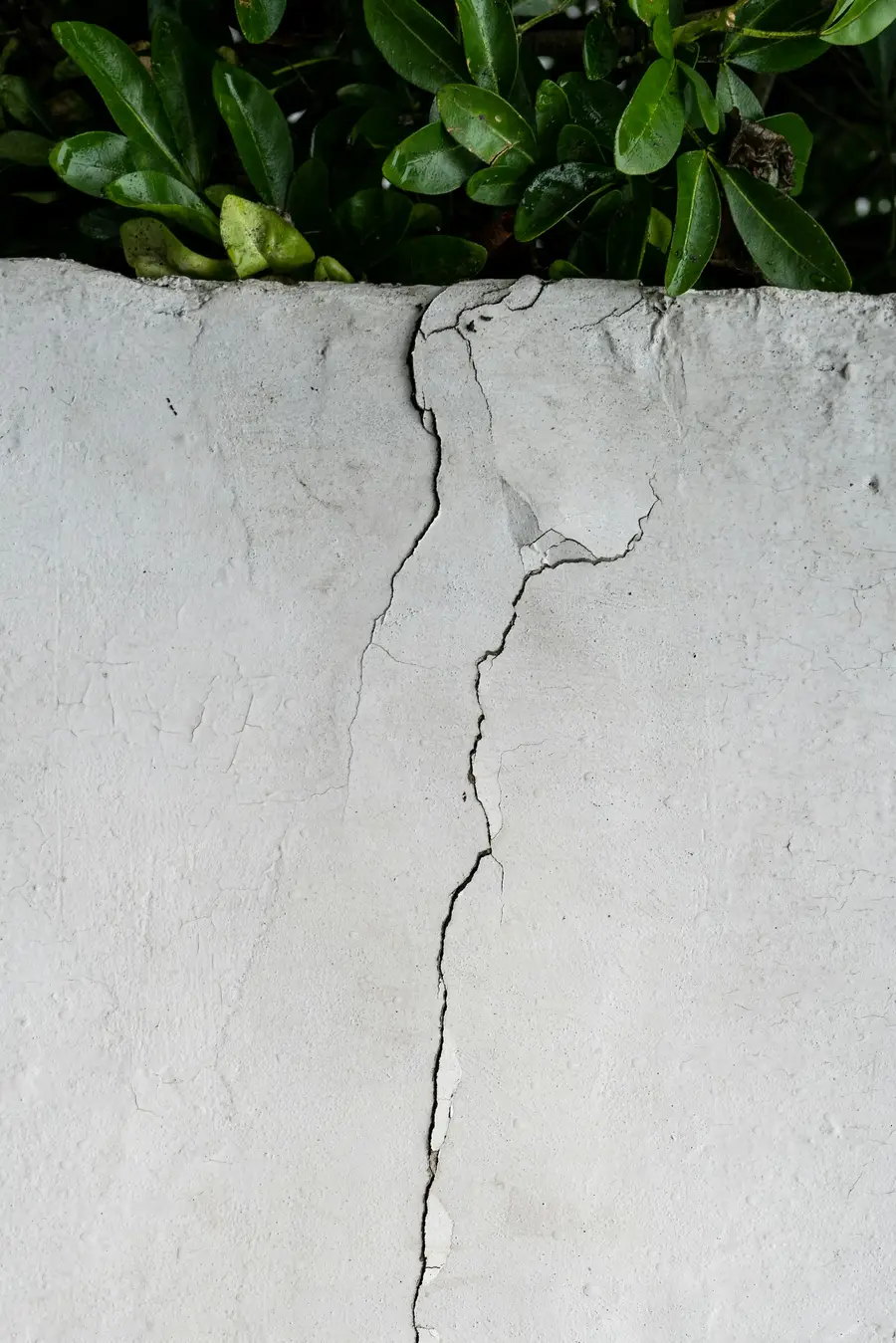
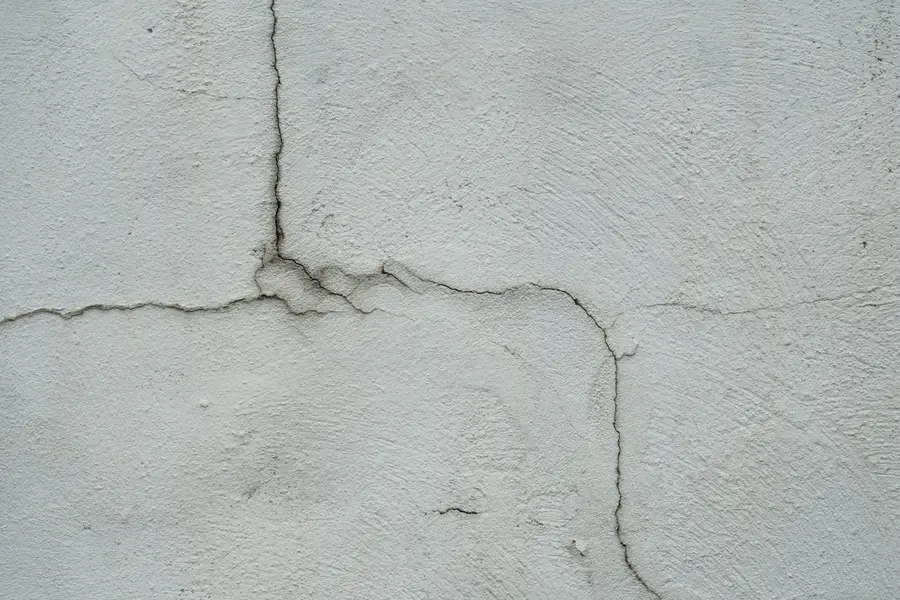
Poured concrete shrinks as it cures, and most foundations crack within the first years — typically a vertical or diagonal line running from a window corner or the top of the wall toward the floor. The crack goes through the wall from the soil side to the room side, so when the ground outside is wet, water follows it in.
How injection works
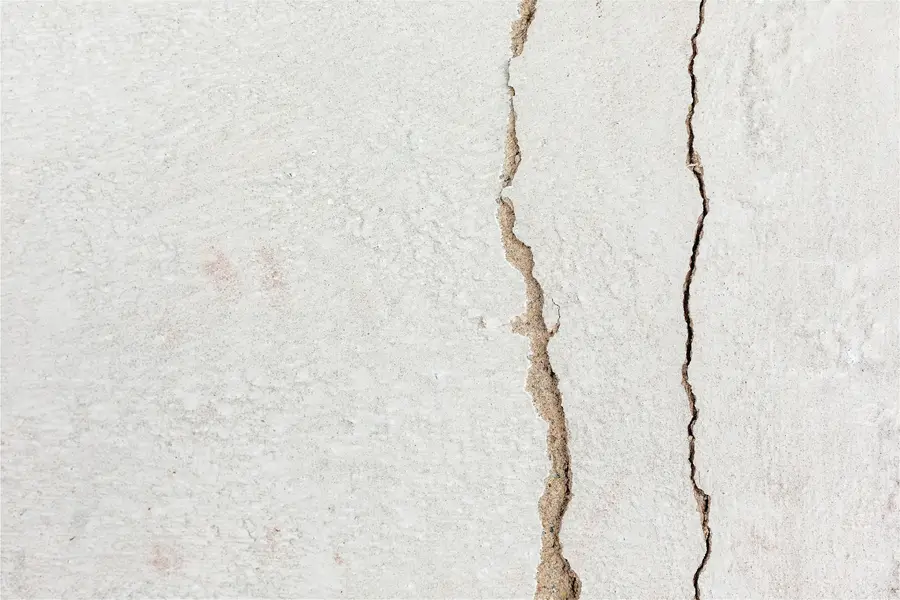
- The crack is cleaned and small plastic ports are fixed along it every 15–20 cm.
- The surface between the ports is sealed with epoxy paste so the resin cannot run back out.
- Polyurethane resin is injected from the lowest port upward. It reacts with moisture, expands and fills the crack all the way to the outside face of the wall.
- The ports are removed once the resin has cured, and the wall can be painted or covered.
Polyurethane stays flexible after curing, so it keeps its seal when the wall moves slightly with the seasons. Rigid epoxy is used instead when the purpose is to restore strength to a structural crack.
Cracks that need more than injection
- A horizontal crack along a block wall, or a wall that bows inward, points to soil pressure. It needs a structural assessment, not a sealant.
- A crack wider than about 6 mm, or one where the two sides are no longer level with each other, shows the foundation has moved.
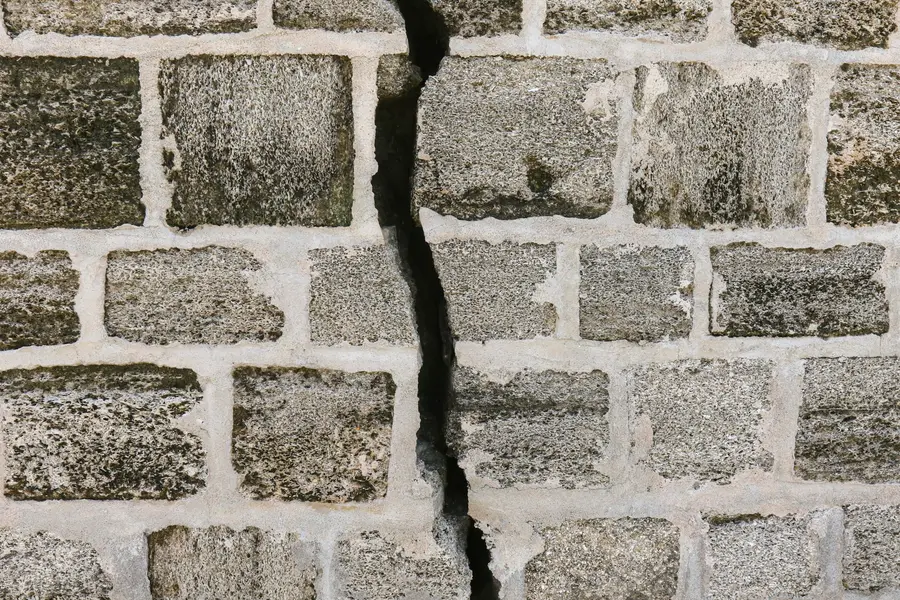
- Stair-step cracks in a block wall follow the mortar joints. Block walls are hollow, so injection does not work; they are sealed from the outside.
Questions about foundation crack repair
Can a crack be injected while it is leaking?
Yes. Polyurethane reacts with water, so a damp or actively leaking crack can be injected.
Does the crack have to be exposed?
Yes. If the wall is finished, a strip of drywall and insulation about 40 cm wide is removed along the crack so the ports can be placed on bare concrete.
Should I worry about a hairline crack that is dry?
A hairline crack that has never leaked can simply be watched. Mark its ends with a pencil and the date; if it lengthens, widens or shows a water stain, have it looked at.

Next step
Have the crack measured and photographed
We tell you whether it is a shrinkage crack that can be injected or a sign of movement that needs something else.
Book a free assessment